






A City of Immigrants

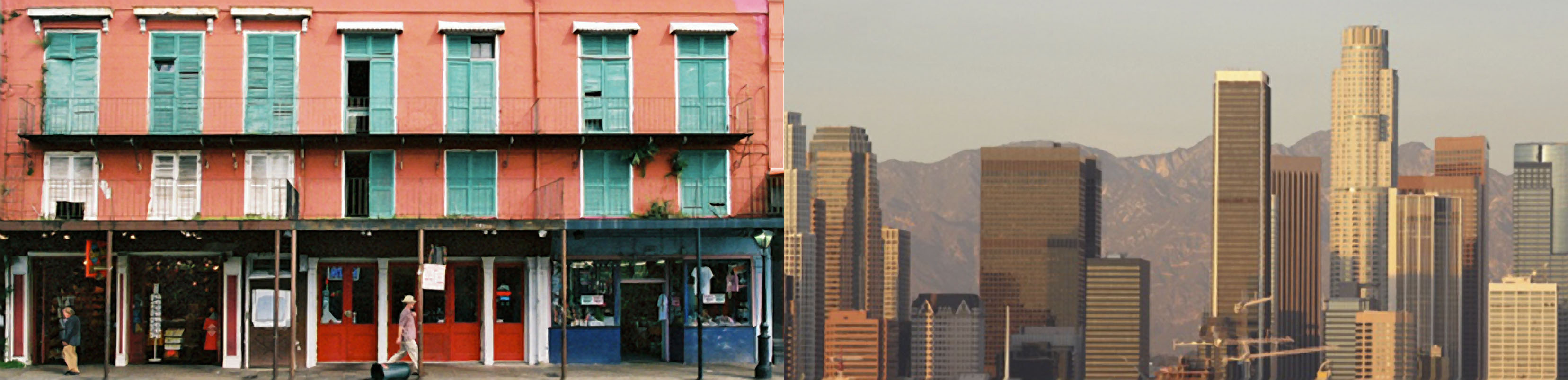
As I am writing this, the city of Los Angeles is under siege – under siege because the current administration in Washington DC has targeted it – sent Immigration Control and Enforcement agents to pull people off the streets, out of businesses – out of Home Depot parking lots, out of car washes, out of restaurant kitchens and clothing factories – to enforce its immigration policies. And it has sent in the National Guard, against the will of the city’s Mayor and the state’s Governor, to quell peaceful and legitimate protests against the administration’s terror. I am in the last couple of days of a week plus long visit to L.A. – the city my parents moved my brothers and me to as young children, the city where I grew up, and the city where I spent over half my life. The city has shaped me as much as the city of New Orleans, the city of my birth and ancestors, which in itself is a city of immigrants. Los Angeles is, of course, and always has been a city completely shaped by immigrants – a city which has freely welcomed immigrants throughout its history. Immigrants currently make up over 35 percent of the County of Los Angeles’ total population. And the city has benefited greatly from its immigrants’ contributions over the years. It would not be what it is – it would have no culture, no industry or no prosperous economy without immigrants. The city is dotted with smaller neighborhood designations – Little Armenia, Little Tokyo, Thai Town, Chinatown, Koreatown, Little Ethiopia, Filipinotown, and of course, its founding square is Olvera Street, at the heart of downtown – a lasting tribute to the city’s Mexican founders (at least half of whom were Afro-Mexican) and immigrants who live throughout the city. It’s hard for me to even begin to know how to talk about how important immigrants have been to this city, and is it my hope and intention to work out my feelings on paper further over the next few days and weeks. For starters, I can’t help think of the industry which the city is known for throughout the world built by European Jewish immigrants. And the fact that L.A. has become a world class food city – a destination food city, thanks in large part to immigrants, who lead and man the city’s many restaurants. Additionally, anyone growing up in Los Angeles grew up eating Mexican food. We, of course, in our own homes ate the food of wherever our family hailed from, but Mexican food for me (and no doubt others) was like a second mother, and I, like so many others, still love it. I was lucky enough, as a child, to sit at the table many a night, at the home of my best early grade school friend, Lillia. Lillia’s family were recent immigrants to the city – her mother spoke almost no English, but her cooking spoke to my heart. I was always welcome in their home, and at their table. Lillia’s mother would deftly pat masa de harina into tortillas right beside us at the table, throw them on to a sizzling griddle, and present them to us, piping hot, to scoop up braised meats, beans and rice, with a slice...
read moreEating My Way Through a Long Weekend in Napa

I took off this past holiday weekend for Napa – only a 45 minute drive from my house – but still, I’ve not visited since I first moved here three years ago. I really have been meaning to get back – just to eat (forget the wineries, which now charge exorbitant prices for a tasting), as Napa is blessed with many great eateries all conveniently located near each other in the downtown area. The downtown is home to Oxbow Market, a large and great market hall – I love a good market hall! – and I’d read that a fast casual offshoot of a higher end Moroccan restaurant in San Francisco, had opened there recently, so Moro was my first stop (and my last, too actually) after checking out the lovely cottage type home where I’d be cat-sitting for the weekend. BTW, the homeowner had grown up in Granada, Spain, where I’d just spent several days this winter. How synchronistic is that! A stroll through Oxbow reveals a beautiful chocolatier, an olive oil shop, a wine and cheese emporium (it is Napa, after all), a spice shop, a produce market – and the bars and restaurants! Okay – lunch at Moro – a very tasty, indeed, Braised Lamb Wrap with Harissa, Toum and Pickled Onions. In fact, it was the favorite thing I ate in my days there. I ordered a side salad of Romaine lettuce and baby kale chocked full of Garbanzos, Cucumbers, Green Olives and Dates (I could have done without the dates, but they are a staple of Moroccan food). The wrap was so good, I grabbed another one as my last act before driving back home. The Fatted Calf – a butcher and charcuterie (it reminds me of Cochon Butcher in New Orleans and those of you who know me will know that it’s one of my favorite places ever) lives on the outer boundary of Oxbow. The next day took me there for lunch where I ordered a slice of a lovely Cherry Tomato Tart with Comté cheese, house smoked ham, and lots of caramelized onions and basil. And almost as an after thought, I grabbed one of the pre-made Porchetta Sandwiches, that wasn’t described as such, but definitely had the elements of a Bahn Mi, with Cilantro and Basil, and Shredded Carrots and Daikon, marinated in a Lemon Chile Vinaigrette. I took both back to the house, and even though I only ate half of the tart slice, I indulged in the whole sandwich which left me in a food coma for the rest of the day… On Saturday morning, it was a trip to the lovely farmer’s market – more about that in a second post. On Saturday evening, it was an early dinner at Zuzu, a Spanish restaurant I had been to a couple of times before, and was anxious to get back to. I – a single woman – walked in on a holiday weekend – which in some cases might land awful service, but not here, the service, as well as the food were both excellent – I’d say outstanding, even. I had Steamed Mussels with Jalapeños, Fried Polenta and get this – crumbled Feta Cheese – served with the most deep golden, crusty bread. I know it’s a...
read moreA Stop at Sánchez-Romate Bodega
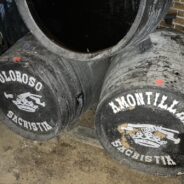
Ironically two of the top highlights of my tour of southern Spain occurred in the somewhat working-class town of Jerez de la Frontera – a town that might be passed over by some, considering all the other great cities on Spain one could visit. The morning after the two nights of breathtaking flamenco performances at the Festival de Jerez, we made our way to the Sánchez-Romate Bodega (winery), before heading out of town and on to our next city, for a private tour. Jerez is a city world famous for its Sherry (the word sherry itself is a derivation of Jerez). This particular winery has a long history in the storied region – founded in 1781 by wealthy noblemen, and still run today by the same family. They produce Sherry, Sherry Vinegars and Brandy. Their Cardinal Mendoza is one of the highest qualities brandies produced in Spain. Sherry wines are fortified wines, meaning brandy is added to the wine to preserve it. Better for all those long 18th and 19th century hauls across the Atlantic, right? While other preservation methods now exist, brandy fortification is still used because of the distinct flavors it can add to the wines. We learned that there is a wide range of Sherry varieties, from the pale Manzanillas and Finos, though the amber Amontillados, on to the darker ambers bleeding into mahoganies of Olorosso, all the way to the deep mahogany colored Pedro Jimenez – which to me was really a sipped dessert. I didn’t get to try all the varieties – it was morning, after all, but I absolutely loved the complex burnt sugar flavors in a glass of the Pedro Jimenez. Just skip the dessert and have it with some cashews and blue cheese. Heaven! And to top off the morning, we were lavishly entertained by master classical guitarist and collaborator with many of flamenco’s greats, Alfredo Lagos. All in all, a Sunday go to church experience for me. Luckily for you, I taped a small portion of the concert to share with you now. Click on the link below to view the unlisted video:...
read moreTraveling through Cádiz – and Beyond
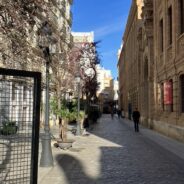
A ramble down an old Cádiz street When I told a friend about my upcoming trip shortly before I left, she said (even though she was encouraging to me), “I’m only a New World person”. And it’s true – I, too, have traveled almost exclusively in the New World. But the New World emerges from the Old. Traveling through Cádiz (the oldest city in Western Europe, founded initially by the Phoenicians and later part of the Roman empire), I witnessed my Old World roots in a personal way – learning that this was the birthplace of the trans-Atlantic slave trade, as this port city held the exclusive licensing agreement with the port of Havana in the New World (as early as the 16th century). I wasn’t the only one. Cári, an Afro-Cuban woman traveling with us, was visibly moved after our walk through the port of Cádiz, and learning the history. The connections that I had seen Ned draw, and his insistence on tracing the African roots echoing through southern Spain – in the dance, in the music, in the history and architecture – was one of the things that initially drew me to this tour. I was chasing the breadcrumbs of the “long song” (a phrase coined by early jazz musician, transplanted from New Orleans to Europe, Sidney Bechet), as I took to calling it – the song that echoes across the Atlantic, to the Gulf of Mexico and the Caribbean. I had learned from Ned, in reading his book, that Havana was the capital of the Spanish colonies in North America. And indeed, there was a steady flow of trade (most obviously and importantly, the slave trade) between Havana and New Orleans, lasting from the 1600’s all the way up to the embargo levied in the 1960’s. It’s because of the embargo, still in place, sadly, that there is so little memory of this connection today. The Port of Cádiz The remnants of a Roman amphitheater in old Cádiz We passed the Calle de los Negroes there – in the African section of town. In the old town square of Cádiz, I was excited to see the statue of Moret, a celebrated 19th century politician. I have numerous Moret (almost all of whom believed their ancestry was French), cousins and ancestors in my extended family line. Emilio J. Rodríguez Posada, CC BY-SA 2.0 https://creativecommons.org/licenses/by-sa/2.0, via Wikimedia Commons It wasn’t Cádiz alone, though. As if visiting there wasn’t enough connection to my history, after I had begun planning this trip, I received an e-mail out of the blue, from a distant and unknown cousin, telling me that my own 3rd great-grandfather had left the coastal town of Sitges, south of Barcelona, to sail to Louisiana in the 18th century. Breadcrumbs. Pretty amazing, right? When I first began looking into visiting Barcelona, a few people had mentioned that it was worth adding on a side trip to the beautiful little town of Sitges. Now I just had to go. So to end my time in Spain, I added on a couple of days there. It was the perfect place to wind down at the end of this intense 3 weeks. This Mediterranean coastal town was like most coastal towns. There was beach volleyball, people out walking their dogs alongside...
read moreOn Returning from Spain, Part 2 – Soul Busting
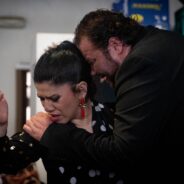
Lola Flores – Jerez’s “patron saint” of Flamenco I think it’s safe to say that the return to our every day normal lives was a bit of a task for most of us. Quite a few of us texted back and forth in our What’s App group in those first few days back home, comparing notes on our experience of the trip and the “re-entry”. I said that I felt like my soul just busted open, in ways, as a result of this trip. And that there were life lessons in it in going forward. We saw a large spectrum of flamenco music and dance – from very traditional to true boundary and genre expanding flamenco. What stood out to me most, was the level of passion I witnessed in the performances we saw. I turned to one of my fellow travelers, who was sitting beside me after one of them – of one of Spain’s most acclaimed flamenco troupes – at the Jerez Flamenco Festival – and asked “Where does all this passion come from?” It was an unabashed, deep passion – sung out, stomped out so loudly (in a good way) into the world – through voices, through bodies, feet and hands. After I asked that question, I said to him, “I know that it resides in me, too. It’s in my blood, in my DNA (read more about that in a later post). And it wasn’t just in large theaters. We stopped into a little cafe in Jerez for lunch, where there was a small stage flamenco performance. The pictures in this post are from that cafe. We all loved it, but I don’t think anyone enjoyed it more than the waiter who just couldn’t contain himself from the sidelines and jumped on the little stage, too. (See the video below) This is what it’s like to be truly immersed in a culture, I thought. And I saw the passion in Pepa, our translator – Barcelona born, and now a New Orleanian preaching the gospel of flamenco in that city. I said to Ned, our fearless leader and curator of this tour, in our post-trip chat, that a lesson for me to ponder was how to bring more of that passion into my life. The Flamenco Festival performance the night before the first above mentioned performance, was also one of those true boundary pushing – perhaps the most -performances. I felt the same thrill and awe that I did as a very young woman – and very young dancer – of seeing the Martha Graham and Alvin Ailey companies perform for the first time – full Broadway production values and all. It’s a gift to still be able to be thrilled in that way in what I’ve come to refer to as the “fourth quarter”. There was the classical guitar performance at the Romate winery in Jerez – home of sherry, as well as flamenco – on a Sunday morning ending our private tour and tasting, the night after those flamenco concerts, that felt like a Sunday going to church meeting. (Again – more about that in a later post.) So – the gift and lesson – more passion for life, and brought to our life, in this “fourth quarter”. All of the wonderful flamenco photos...
read moreOn Returning from Spain
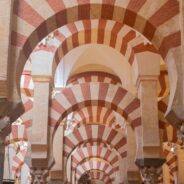
I’ve just returned from a bit over 3 weeks in southern Spain. The second two weeks was spent with a group, on a tour curated by Ned Sublette, a favorite writer of mine, who became a personal acquaintance during the COVID shutdown, when he began a Zoom group showing wonderful documentaries, showcasing what he calls the Afro-Atlantic, and who’s now a friend. Our fearless leader, Ned. Ned said to us at the beginning of the trip that he hoped it would be transformative – a pretty big aspiration. But it was, for me, in several ways. BTW, the last time I took a transformative trip – a trip that’s stayed with me throughout my life – and the last time I crossed an ocean – was almost exactly 40 years ago. That trip was more overtly “spiritual” as it was an ecumenical religious tour to India. But during the course of a lifetime, what’s spiritual in ones life evolves, so this trip certainly fell into the realm of the “spiritual”, too. For several years, Ned has led tours to New Orleans (I didn’t really feel the need for that) and to Cuba. Although I didn’t join one of his tours there, it was something he wrote in his book, The World That Made New Orleans, that finally got me there. But when he sent out a feeler last year, saying he was considering an Andalućia tour, and wondering how much interest there was, I thought – now here’s a tour that piques my attention. You know how things go – at least they often do for me. I thought I really can’t afford it. Maybe next year I’ll be better able to afford it. Some other year will be better, perhaps … until Al, my younger brother left us; until he just didn’t wake up one morning, and I got a serious “wake-up” call from the “universe”, if you will. There is no other time. We are not promised some other year. So, shortly after Al’s funeral, I contacted Ned and committed to the trip. I felt Al with me on this trip – like he had given me a gift, even in his death – the wake up call to go out and live my life. One of my fellow travelers, at one of our last lunches together said something similar. She had spent time in Rwanda after the war and the rebuilding of that country. The image of a little boy’s eyes she had seen in a photo in a museum there haunted her. She asked the image what message it had for her amidst all this suffering. Go out and live. Live for me. Live your life, it said to her. I told her about Al, and we understood and shared the solemn charge. She was traveling with her husband who had admitted to me earlier that he was traveling with early stage Parkinson’s disease and a recent cancer diagnosis. It was a gift to me to see so many living their lives – in spite of the illnesses, the age, the uneven gait – a sign of degenerated knees – that I recognized and shared with them. Just go out and live. Live your life. Frankly, I’m still processing it all – and may be...
read moreStaying in Baja
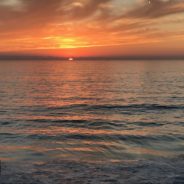
Circumstances (which I won’t bother to go into here) find me in Baja, Mexico for an as yet undetermined period of time. Although I’m not ready to pack up and move south of the border, I have to say it’s pretty pleasant. There are the truly awesome ocean views and sunsets, great seafood (dining on the great seafood and the beautiful sunsets are often combined) and truly friendly people … A few days ago, at nearby Splash Restaurant, where I’ve been spending a lot of time, I was gazing, mesmerized, out at the barely perceptible swells burnished by the sunlight, grow into big waves and crash on to the shore. I wondered out loud to the manager who had come over to chat with me, whether the people who are native to the area truly appreciate this, or have come to take it for granted. We get caught up in our busy lives, he told me, and sometimes we forget how lucky we are – and it’s all there for free for us, he added. Indeed. I’m staying about halfway between Rosarito and Ensenada. Ensenada has a beautiful marina, a great local seafood market – and some pretty outstanding restaurants, too. There are cute coffee shops, in lovely “mini-mall” courtyards, even a Starbucks or two for Americans “jonesing” for such. More about there in the next post. As luck would have it, I happened to be here at the time of the Day of the Dead celebration. While COVID is, obviously, as much a threat here as it is across the border, everyone’s taking precautions. I don’t hear any bickering about wearing masks. Every business I enter I’m given a mandatory temperature check, there is obligatory hand sanitizer at the door, and everyone – everyone is wearing masks. And fortunately for me, all of the restaurants have large outdoor patios. Yep, life can be very good, even when it’s uncertain. Even when a storm is coming, sunsets can be pretty awesome The seafood can even find its way into an omelette for a special brunch...
read moreDriving Through the Hill Country of Texas – and Visiting the LBJ Ranch
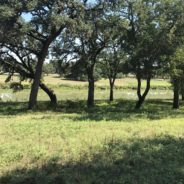
It’s so beautiful, I think, as I drive through in the Hill Country of Texas. It’s not the dramatic vast ocean and mountain beauty of California, or the lush oak trees draped with moss, verdant beauty of Louisiana, but still, an awe inspiring beauty. There are vast blue skies with huge fluffy clouds hovering over and nestling themselves on the green rolling hills. It’s good to get out, drive the highways – especially the back roads – and see the great diversity of this country. There aren’t a whole lot of tourist attractions in the Hill Country. The main attraction for me was visiting the LBJ Ranch, part of our nation’s historic park system. Some of us children of the 1960’s, who came of age during the Vietnam War debacle, may have a difficult time seeing past LBJ’s role in that when scrutinizing his legacy. But God knows, Presidents are human, and humans are flawed, in spite of greatness in other areas. Sometimes it seems the greater the leader, the deeper the flaws can be. That time was a time, not unlike today, so fraught with discord, unrest and tension. LBJ’s legacy is so pertinent today – the shepherd and signer of the Voting Rights Act, now under assault; the visioneer of the Great Society and the War on Poverty. The work remains unfinished. I felt something wild, sacred and compelling about his deep connection to this land, a land he believed molded the character of the people who lived on it – land inhabited by native tribes, Mexican ranchers, Africans – some free men who entered from Mexico, some enslaved, and some who, post-Civil War, roamed it as the famed Buffalo soldiers – sturdy German immigrants, all who made up the great diversity that is America, something that seems almost lost to us today, only a few generations later. And something powerfully moving as I considered how the policies so important to him were informed by that land and the various peoples who’d lived on it – and often worked cooperatively alongside each other – over time. As I left the site, the park ranger asked me how I enjoyed the visit. I replied, it’s so good to look back on a time where there was great leadership in this country. Her eyes widened behind the plastic shield covering her face, and she silently and enthusiastically nodded in...
read moreRediscovering My Neighborhood – Algiers Point, New Orleans – and Transforming Myself
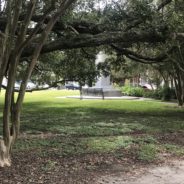
We are now in our 4th month of a stay at home, or what’s been now re-dubbed here in New Orleans, a “safer at home” mandate. In the first month or so of the order, I viewed it as an adventure, of sorts, even as a personal moment of transformation that we were all going through together. I appreciated the quiet. I noticed the cardinals landing in my backyard, as they traveled along their springtime migratory path, even capturing a rare picture of one (they are notoriously skittish). I cooked something interesting for myself every day (more about that in the next few posts). I watched a lot of great shows on Netflix. And I walked in the evenings, using the time to rediscover my lovely neighborhood – Algiers Point – noticing that we were, ironically, in the midst of a particularly beautiful spring, in what would have been the height of New Orleans’ festival season. I am lucky – it’s a neighborhood full of 100 year old+ homes and lush beautiful gardens. I shoot pics of colorful plants, which my Facebook community has schooled me in when it came to their names. We have a couple of lovely small parks tucked amidst the tree lined streets. In those cooler days of spring, people sat out on their front porches – more than I seen since I was a child – sharing a drink, waving at passersby. Sometimes musicians in the neighborhood would grace us with a porch concert as we stood in front of our houses. Park at the Center of Algiers Point Calladiums Hibiscus Variegated Ginger Trumpet Plant There’s a lovely view of the French Quarter, and its heart, St. Louis Cathedral from a walking/bike path atop the levee, just two blocks from the house. St. Louis Cathedral And near the entrance to the ferry terminal, there’s a rare statue, in this city, that no one wants to tear down. Nearby, there’s also, sadly, a reminder of the area’s darker, shameful past – a plaque marking the spot where captured Africans were off loaded from ships and held, waiting to be ferried across the river and sold into slavery. Satchmo’ Louis Armstrong That reminder, in a circle of history, brings us back to this moment – a transformational moment, a shifting paradigm, if you will, for our country. I marvel that, in my 60’s now, I am witnessing now another time of societal upheaval. I find myself saying to friends that our generation’s lives are bookended by this time, as I reminisce about the era of the late 1960’s, comparing the unfinished work of that time to the work taken up by a younger generation today. I find myself chafing a bit, anxious to get back to my life. I use the time to transform myself, as best I can. And I wonder how I can best care for myself, and my...
read moreVisiting Montgomery, Alabama
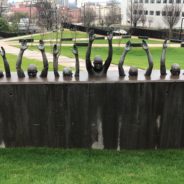
This is the sign that greeted me, painted on the side of the building as I drove up to the Legacy Museum. On a long winter’s weekend – before this period of “self-isolation” we all currently find ourselves in, before Ahmaud Arbery, Breanna Taylor and then George Floyd, before this momentous period of civil unrest, and after a couple of days in Pensacola, Florida, I headed north to Montgomery, Alabama – the first home of the Confederacy. It was mixed kind of weekend getaway. Pensacola is mostly a beach town – although, as it was the first settlement by Europeans in the U.S., one visits the town center for the early American history. While Montgomery is mostly – maybe only – a town one visits if interested in civil rights history. It wasn’t like the issue of our civil rights history didn’t come up in Pensacola, either, though. The Florida Panhandle is still the Deep South. I signed up for a local historical tour of the old town area while there. In chatting with the tour guide, my interest in history became clear to him – he liked that, but (don’t ask me how it happened) it wasn’t long before the issue of Confederate monuments and the Civil War came up. He told me that the Civil War was fought over taxes. I said, everything in this country – taxes, the electoral college, gun rights and the 2nd Amendment – they all have their roots in slavery. Thankfully, the only others on the tour were a couple from Canada. They knew where I was coming from, and I felt silent sympathy and support from them. I don’t think I could have stood a Southern couple traveling along. And thankfully the tour guide was amiable, and ended by saying “well, at least you love history, and I can see that you’re passionate about this”. So it was from there, that I headed to Alabama, into the belly of the beast, “the coffin” as Ta-Nehisi Coates calls it in his newly released novel, The Water Dancer: A Novel, which I had recently read. There was a line stretching down the block to enter the museum when I drove by. And after wandering a while around downtown Montgomery looking for a parking space, I finally made it there by mid-afternoon. The area is a somewhat jarring mix of civil rights monuments (the Dexter Avenue Baptist Church, the Southern Poverty Law Center’s Civil Rights Monument designed by Maya Lin, the Rosa Parks Museum) right alongside Alabama state office buildings and ever present reminders of its Confederacy past. Southern Poverty Law Center’s Civil Rights Monument I decided after being told tickets to the museum had to be purchased at the National Memorial for Peace and Justice, commonly referred to as the lynching memorial (The Legacy Museum and the Memorial are two parts of the museum at separate locations a few blocks from each other), and that there was good chance I wouldn’t get into the museum that afternoon, I decided to go to my hotel and try again early Sunday morning. It was a drizzly morning, as I drove through Montgomery, trying my best to follow the GPS, when there – I saw them in the distance, peeking through the houses of the nondescript...
read more

