






A City of Immigrants

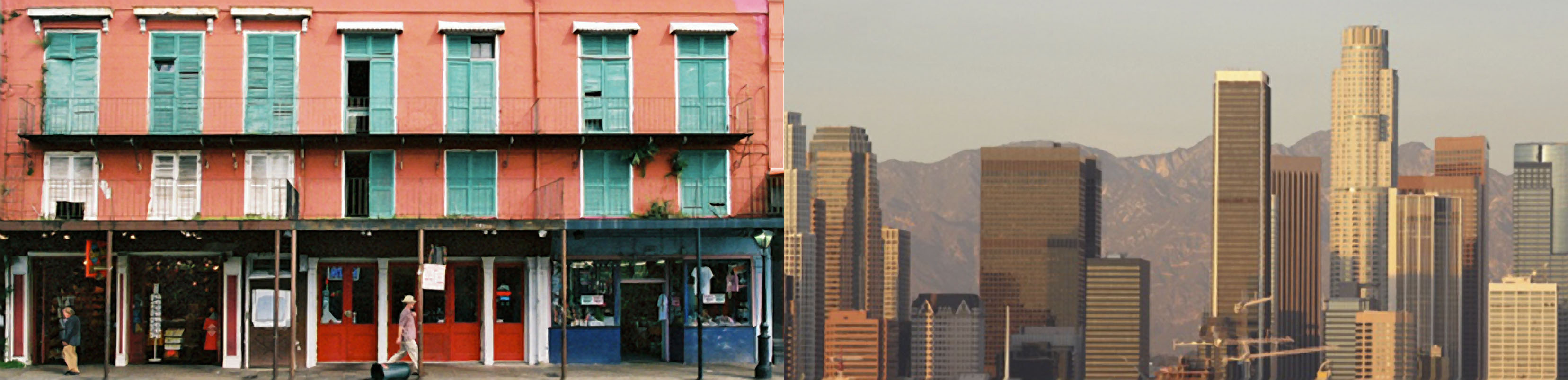
As I am writing this, the city of Los Angeles is under siege – under siege because the current administration in Washington DC has targeted it – sent Immigration Control and Enforcement agents to pull people off the streets, out of businesses – out of Home Depot parking lots, out of car washes, out of restaurant kitchens and clothing factories – to enforce its immigration policies. And it has sent in the National Guard, against the will of the city’s Mayor and the state’s Governor, to quell peaceful and legitimate protests against the administration’s terror. I am in the last couple of days of a week plus long visit to L.A. – the city my parents moved my brothers and me to as young children, the city where I grew up, and the city where I spent over half my life. The city has shaped me as much as the city of New Orleans, the city of my birth and ancestors, which in itself is a city of immigrants. Los Angeles is, of course, and always has been a city completely shaped by immigrants – a city which has freely welcomed immigrants throughout its history. Immigrants currently make up over 35 percent of the County of Los Angeles’ total population. And the city has benefited greatly from its immigrants’ contributions over the years. It would not be what it is – it would have no culture, no industry or no prosperous economy without immigrants. The city is dotted with smaller neighborhood designations – Little Armenia, Little Tokyo, Thai Town, Chinatown, Koreatown, Little Ethiopia, Filipinotown, and of course, its founding square is Olvera Street, at the heart of downtown – a lasting tribute to the city’s Mexican founders (at least half of whom were Afro-Mexican) and immigrants who live throughout the city. It’s hard for me to even begin to know how to talk about how important immigrants have been to this city, and is it my hope and intention to work out my feelings on paper further over the next few days and weeks. For starters, I can’t help think of the industry which the city is known for throughout the world built by European Jewish immigrants. And the fact that L.A. has become a world class food city – a destination food city, thanks in large part to immigrants, who lead and man the city’s many restaurants. Additionally, anyone growing up in Los Angeles grew up eating Mexican food. We, of course, in our own homes ate the food of wherever our family hailed from, but Mexican food for me (and no doubt others) was like a second mother, and I, like so many others, still love it. I was lucky enough, as a child, to sit at the table many a night, at the home of my best early grade school friend, Lillia. Lillia’s family were recent immigrants to the city – her mother spoke almost no English, but her cooking spoke to my heart. I was always welcome in their home, and at their table. Lillia’s mother would deftly pat masa de harina into tortillas right beside us at the table, throw them on to a sizzling griddle, and present them to us, piping hot, to scoop up braised meats, beans and rice, with a slice...
read moreDriving Through the Hill Country of Texas – and Visiting the LBJ Ranch
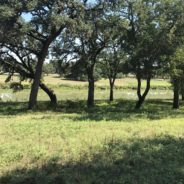
It’s so beautiful, I think, as I drive through in the Hill Country of Texas. It’s not the dramatic vast ocean and mountain beauty of California, or the lush oak trees draped with moss, verdant beauty of Louisiana, but still, an awe inspiring beauty. There are vast blue skies with huge fluffy clouds hovering over and nestling themselves on the green rolling hills. It’s good to get out, drive the highways – especially the back roads – and see the great diversity of this country. There aren’t a whole lot of tourist attractions in the Hill Country. The main attraction for me was visiting the LBJ Ranch, part of our nation’s historic park system. Some of us children of the 1960’s, who came of age during the Vietnam War debacle, may have a difficult time seeing past LBJ’s role in that when scrutinizing his legacy. But God knows, Presidents are human, and humans are flawed, in spite of greatness in other areas. Sometimes it seems the greater the leader, the deeper the flaws can be. That time was a time, not unlike today, so fraught with discord, unrest and tension. LBJ’s legacy is so pertinent today – the shepherd and signer of the Voting Rights Act, now under assault; the visioneer of the Great Society and the War on Poverty. The work remains unfinished. I felt something wild, sacred and compelling about his deep connection to this land, a land he believed molded the character of the people who lived on it – land inhabited by native tribes, Mexican ranchers, Africans – some free men who entered from Mexico, some enslaved, and some who, post-Civil War, roamed it as the famed Buffalo soldiers – sturdy German immigrants, all who made up the great diversity that is America, something that seems almost lost to us today, only a few generations later. And something powerfully moving as I considered how the policies so important to him were informed by that land and the various peoples who’d lived on it – and often worked cooperatively alongside each other – over time. As I left the site, the park ranger asked me how I enjoyed the visit. I replied, it’s so good to look back on a time where there was great leadership in this country. Her eyes widened behind the plastic shield covering her face, and she silently and enthusiastically nodded in...
read moreVisiting Montgomery, Alabama
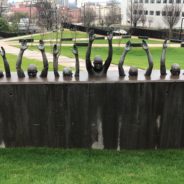
This is the sign that greeted me, painted on the side of the building as I drove up to the Legacy Museum. On a long winter’s weekend – before this period of “self-isolation” we all currently find ourselves in, before Ahmaud Arbery, Breanna Taylor and then George Floyd, before this momentous period of civil unrest, and after a couple of days in Pensacola, Florida, I headed north to Montgomery, Alabama – the first home of the Confederacy. It was mixed kind of weekend getaway. Pensacola is mostly a beach town – although, as it was the first settlement by Europeans in the U.S., one visits the town center for the early American history. While Montgomery is mostly – maybe only – a town one visits if interested in civil rights history. It wasn’t like the issue of our civil rights history didn’t come up in Pensacola, either, though. The Florida Panhandle is still the Deep South. I signed up for a local historical tour of the old town area while there. In chatting with the tour guide, my interest in history became clear to him – he liked that, but (don’t ask me how it happened) it wasn’t long before the issue of Confederate monuments and the Civil War came up. He told me that the Civil War was fought over taxes. I said, everything in this country – taxes, the electoral college, gun rights and the 2nd Amendment – they all have their roots in slavery. Thankfully, the only others on the tour were a couple from Canada. They knew where I was coming from, and I felt silent sympathy and support from them. I don’t think I could have stood a Southern couple traveling along. And thankfully the tour guide was amiable, and ended by saying “well, at least you love history, and I can see that you’re passionate about this”. So it was from there, that I headed to Alabama, into the belly of the beast, “the coffin” as Ta-Nehisi Coates calls it in his newly released novel, The Water Dancer: A Novel, which I had recently read. There was a line stretching down the block to enter the museum when I drove by. And after wandering a while around downtown Montgomery looking for a parking space, I finally made it there by mid-afternoon. The area is a somewhat jarring mix of civil rights monuments (the Dexter Avenue Baptist Church, the Southern Poverty Law Center’s Civil Rights Monument designed by Maya Lin, the Rosa Parks Museum) right alongside Alabama state office buildings and ever present reminders of its Confederacy past. Southern Poverty Law Center’s Civil Rights Monument I decided after being told tickets to the museum had to be purchased at the National Memorial for Peace and Justice, commonly referred to as the lynching memorial (The Legacy Museum and the Memorial are two parts of the museum at separate locations a few blocks from each other), and that there was good chance I wouldn’t get into the museum that afternoon, I decided to go to my hotel and try again early Sunday morning. It was a drizzly morning, as I drove through Montgomery, trying my best to follow the GPS, when there – I saw them in the distance, peeking through the houses of the nondescript...
read moreVisiting the Whitney Plantation
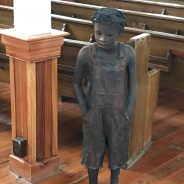
I returned to River Road this past weekend to spend an aptly cloudy afternoon visiting the Whitney Plantation, the United States’ only plantation dedicated to the enslaved.
read moreA Visit to Washington DC – and the New African American Museum
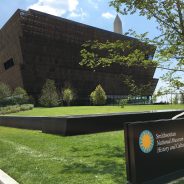
A summer escape to the Washington DC area with a visit to the new National Museum of African American History.
read moreNew Orleans’ Confederate Monuments
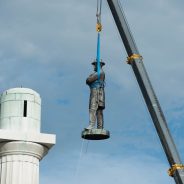
Mayor Mitch Landrieu gave a moving speech Friday afternoon, as the last of the city’s four Confederate was coming down. He mentioned in his remarks all the people that had left New Orleans because of exclusionary attitudes – people like my parents, and indeed much of my extended family, who joined the tens of thousands, and perhaps more, in leaving the city for a better life.
read moreCuba Revisited: Day 1 – The Rolling Stones

My second visit to Cuba, at this historic time, begins with seeing The Rolling Stones.
read moreCelebrating Dooky Chase’s Restaurant and Ms. Leah Chase
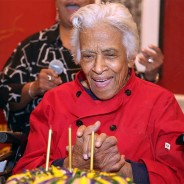
Ms. Leah Chase’s 93rd birthday celebration, and the 75th anniversary of Dooky Chase’s restaurant.
read moreOysters Rockefeller, Escargots and Barefoot Wine
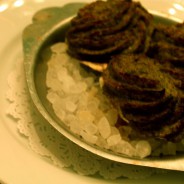
Lunch with Barefoot Wines at Antoine’s in New Orleans, home of the original Oysters Rockefeller
read moreMeet Me at the Farmers Market-a Sunday Field Trip to L.A.’s Original (Part 2)
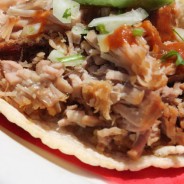
A photo essay on the Original Farmers Market at Third and Fairfax There are a few remaining produce stands at the Farmers Market, but mostly it’s filled with vendors and small restaurants, old and new, selling food, both raw product and prepared treats. Sustainably Raised Beef at Marconda’s Meats Jars of tea at “T” and teapots Freshly churning nut butter at Magee’s House of Nuts There are fun, kistchy little touches like the porcelain chicken watching over the counter at Farmers Market Poultry and the two-wheeled wooden shopping carts, hand-made on the property and painted “Farmers Market Green,” the official name of the color. or just bring your own wooden cart… I mostly go to the market nowadays for a quick brunch or lunch, and most often it’s to Loteria Grill (my newer favorite) or Banana Leaf (my older favorite, which is just down a lane from my older favorite place), although I have to say that as a result of this field trip, Short Order and Short Cake are now definitely on my list of places to try. Scones at Short Cake Ah- and speaking of Loteria Grill, the day would not have been complete without a stop for a couple of their tacos. Muy Sabor! Ordering at the very busy Loteria Grill Carnitas Tacos at Loteria...
read more

