







Reflection – 60 Years After the March on Washington

This weekend, a march is being held in Washington DC commemorating the historic March on Washington held this month 60 years ago – a march indelibly imprinted in the mind of this adolescent girl, along, no doubt, with many others of her generation. The first march was considered radical and potentially dangerous, so much so that President John F. Kennedy, stayed away – nervous about attending. Instead, he watched and listened to the speeches being given at the Lincoln Memorial facing the National Mall through an open window from his White House office. Image Courtesy of Wikimedia Commons The march was seminal, laying the foundation for so much of the progress we’ve witnessed during our lives – including the election of a black man as President of the United States, something most of us felt was unimaginable in our lifetime. Thinking back on it all can elicit exhilarating moments. And yet, it is completely disheartening to know that so much of what Dr. Martin Luther King, Jr. and others marched for that day – indeed, spent and gave their lives fighting for – we, as a people, are still having to fight ferociously for today. Image Courtesy of Wikimedia Commons Today the right and easy access, for all American citizens to vote, remains a battle. Young black men are still being killed indiscriminately. Health outcomes for black women and infants – challenged even more so now with the war against safe and legal access to abortion – lag way behind those of white women in the U.S., and many other countries in the world. Today I listened to recordings of Sweet Honey in the Rock, a group I loved decades ago, but hadn’t thought much about lately, until I mentioned Bernice Johnson Reagon’s wonderful lyric in the last piece I posted here, speaking of how the music formed me. The music not only formed me, but fueled an entire movement of change. Image Courtesy of Wikimedia Commons I was reminded of the lyric again this week when a Facebook friend posted that she was “resigning – staying away” from being a public voice for social change, and I quoted them to my friend. She responded that she was moving her voice into more artistic areas. I get it. I understand the burnout, but I say we bring who we are to our artistic work – whether it’s writing, singing, dancing, acting, creating beautiful food – at least I hope we always strive to do so. And again, I can’t help but think of the beautiful artistry speaking of social change in the work of Sweet Honey in the Rock, and indeed so many of the artists who raised their voices on that August day in 1963 and beyond. We need the artistry to fuel us and keep us going. “We who believe in freedom cannot...
read moreVisiting Montgomery, Alabama
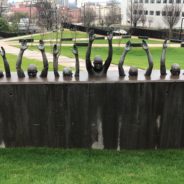
This is the sign that greeted me, painted on the side of the building as I drove up to the Legacy Museum. On a long winter’s weekend – before this period of “self-isolation” we all currently find ourselves in, before Ahmaud Arbery, Breanna Taylor and then George Floyd, before this momentous period of civil unrest, and after a couple of days in Pensacola, Florida, I headed north to Montgomery, Alabama – the first home of the Confederacy. It was mixed kind of weekend getaway. Pensacola is mostly a beach town – although, as it was the first settlement by Europeans in the U.S., one visits the town center for the early American history. While Montgomery is mostly – maybe only – a town one visits if interested in civil rights history. It wasn’t like the issue of our civil rights history didn’t come up in Pensacola, either, though. The Florida Panhandle is still the Deep South. I signed up for a local historical tour of the old town area while there. In chatting with the tour guide, my interest in history became clear to him – he liked that, but (don’t ask me how it happened) it wasn’t long before the issue of Confederate monuments and the Civil War came up. He told me that the Civil War was fought over taxes. I said, everything in this country – taxes, the electoral college, gun rights and the 2nd Amendment – they all have their roots in slavery. Thankfully, the only others on the tour were a couple from Canada. They knew where I was coming from, and I felt silent sympathy and support from them. I don’t think I could have stood a Southern couple traveling along. And thankfully the tour guide was amiable, and ended by saying “well, at least you love history, and I can see that you’re passionate about this”. So it was from there, that I headed to Alabama, into the belly of the beast, “the coffin” as Ta-Nehisi Coates calls it in his newly released novel, The Water Dancer: A Novel, which I had recently read. There was a line stretching down the block to enter the museum when I drove by. And after wandering a while around downtown Montgomery looking for a parking space, I finally made it there by mid-afternoon. The area is a somewhat jarring mix of civil rights monuments (the Dexter Avenue Baptist Church, the Southern Poverty Law Center’s Civil Rights Monument designed by Maya Lin, the Rosa Parks Museum) right alongside Alabama state office buildings and ever present reminders of its Confederacy past. Southern Poverty Law Center’s Civil Rights Monument I decided after being told tickets to the museum had to be purchased at the National Memorial for Peace and Justice, commonly referred to as the lynching memorial (The Legacy Museum and the Memorial are two parts of the museum at separate locations a few blocks from each other), and that there was good chance I wouldn’t get into the museum that afternoon, I decided to go to my hotel and try again early Sunday morning. It was a drizzly morning, as I drove through Montgomery, trying my best to follow the GPS, when there – I saw them in the distance, peeking through the houses of the nondescript...
read moreNew Orleans’ Confederate Monuments

Mayor Mitch Landrieu gave a moving speech Friday afternoon, as the last of the city’s four Confederate was coming down. He mentioned in his remarks all the people that had left New Orleans because of exclusionary attitudes – people like my parents, and indeed much of my extended family, who joined the tens of thousands, and perhaps more, in leaving the city for a better life.
read moreThe Second Line

Whenever a group of New Orleanians is gathered, either in Los Angeles or the Crescent City, they rise to their feet and start waving their handkerchiefs, and often umbrellas, when the Second Line’s funky beat wafts over them.
read moreImpressions on August 29th Six Years Later- and Quinoa Salad

Reflections and meeting with friends on the 6th anniversary of hurricane Katrina
read moreA Registered Dietitian Shares her Thoughts on Healthy Fish Choices and the State of our Oceans
Okay- as much as we love good food and good times, sometimes we have to get a little intense, and stop to consider just where our food comes from, how it's raised, and just how it gets to our groceries. Sadly, more and more, we also have to consider whether our favorite foods will still be around a few years down the line. Today I am happy to have Monika Woolsey, a registered dietitian specializing in the treatment of chronic and stress-related disease, as a guest blogger. Monika contacted me when a mutual friend told her about the LA Helps LA Event, because she feels passionately about the state of our oceans, and how the health of the earth’s oceans impacts our health as humans. Thanks to Monika for sharing her expertise and insight, and read to the end, as she has a special gift for all who attend our event. -Best, G. Not long into the process of choosing my area of specialty, and digging into the research, it became clear that there is huge potential in the ocean for solutions to some of our most debilitating health problems. Diabetes, arthritis, osteoporosis, Alzheimer's disease, schizophrenia, even infertility…have all been seen to respond to omega-3 supplementation. As the research about this continued to pile up, it became clear to me that humans are completely dependent on healthy oceans in order to have good health themselves. Unfortunately, we don't seem to understand the "healthy oceans" half of that equation. Rather than look at the science and the data, which suggest that we can get omega-3's from any ocean-related food source, we've become obsessed with salmon. The demand for wild salmon has placed stress on those populations. It is likely our obsession with this one fish that created demand for genetically altered, quick-growing salmon, and that has subsequently created outrage. Here are some challenges to this obsession with salmon. Did you know: lake trout actually has more omega-3 fatty acids per ounce than salmon? Did you know: wild salmon aren't always 100% wild? That they often spend up to the first two years of life in hatcheries before being released in the ocean? Our misperception of the definition of the word "wild" has made it difficult for fish farming to take hold as a sustainable solution to our increasing demand for fish. Did you know: as of this month, five different species of farmed seafood (oysters, rainbow trout, Arctic char, barramundi, and mussels) made the Monterey Bay Aquarium Seafood Watch Program's list of Super Green Choices? Did you know: domestic catfish farmers have received endorsement from Sea Choice, the Endangered Fish Alliance, Sierra Club, Audubon Society and Monterey Bay Aquarium for their green practices?Our attitude seems to be that because the ocean is big, that there's more than enough fish for everyone. Not true! Did you know: Chilean sea bass, grouper, mahi mahi, red snapper, and several types of salmon have been rated as "avoid" by the Monterey Bay Aquarium because they are either overfished or cultivated in ways that harm the environment? Beyond just the salmon vs. “green fish” issue, we've also been slowly suffocating our oceans, making it hard for any life to thrive. The recent oil spill in the Gulf of Mexico definitely got our attention, but that region has been sick...
read moreLessons learned from Hurricane Katrina and the BP oil spill- and how LA Helps LA
Every disaster we face brings with it hard won life lessons, and even silver linings.
Here are a couple of lessons I have learned, and which I have observed that the people of coastal Louisiana have learned in the past 5 years.
read moreA different perspective on the Gulf disaster-an interview with Poppy Tooker
I was very fortunate today, to be able to have a conversation with Poppy Tooker, head of Slow Food New Orleans, host of the PBS television show Eat it to Save It and the newly launched Louisiana Eats radio show on WWNO, the National Public Radio station in New Orleans, and avid fisherwoman whose own fishing camp on the Gulf coast is now, sadly, surrounded by oil. It was an especially timely interview, as just a couple of days ago P&J Oysters, a 134 year old family owned business announced that they would be shutting down their oyster shucking division, as there are not enough Gulf oysters to shuck. An aside here, as a child I remember my parents shopping for jars of P&J Oysters along Jefferson Avenue, the shopping outpost of expatriate New Orleanians in Los Angeles. Oysters always made an appearance in our turkey dressing at Thanksgiving and Christmas, and my family’s ground beef and oyster dressing remains my favorite to this day. One year, my mother for some reason, was unable to get P&J Oysters, and used California oysters instead. Upon tasting she promptly declared these California oysters “nasty”, and said they “ruined her dressing.” Poppy said she could not say definitively at this time, what the future of P&J would be. “They are ruminating about importing oysters, wondering if there will be an immediate future as a boutique oyster supplier.” What do you mean by that, I asked. “Importing oysters from the East and West Coasts”, she responded. Poppy offered perspectives that may differ from those of many of us in other parts of the country who join her in the outrage we feel over the BP Gulf oil spill. Her energy level rose as she talked of “overzealous people who say this is the last time we should be eating animals from the Gulf, or that we should be eating a vegan diet," referring to comments on a story posted at www.Grist.org. “All of our shrimpers use the bycatch (including crabs, squid)-things that we eat, and they use very sophisticated technology and bycatch reduction devices.” “In most cases, these businesses are multi-generational family businesses. Some of the oyster beds have been maintained for over 100 years.” She told me the story of an oyster man named Wilbert Collins. “This man went to work as a deck hand when he was very young. His father took over the business from his grandfather, and he took it over from his father, and now his sons…” her voice trailed off. “He has a sixth grade education. What will he do? And like he says, ‘this will be tied up in the courts ‘til I’m dead.’" When I asked her what she had to say to people across the country, she passionately urged people to buy and eat wild Gulf seafood, if it’s available. “You’re helping a family put a meal on their table. You’re helping them make a payment on boats they had to retool after Katrina. She also had a different perspective to offer when I asked about the controversy brewing regarding the moratorium President Obama has enacted on deep water drilling. “It’ll be the final blow if it goes on for 6 months. It would be one thing if we knew they were phasing...
read moreReflections in the Wake of the Gulf Coast Spill -Part 2
It’s ironic that the BP spill happened the week that we were celebrating the 40th anniversary of Earth Day. 40 years ago a dreadful oil spill washed up on the wide sandy shores of southern California. That will not be the case on the Gulf Coast.
read moreReflections in the Wake of the Gulf Coast Spill -Part 1
It’s ironic that the BP oil spill happened only a month after the Upper Big Branch Mine accident in West Virginia. The towns and hamlets along Louisiana’s marshy coast line have, as it turns out, some commonality with the coal mining towns of Appalachia.
read more

