






A City of Immigrants

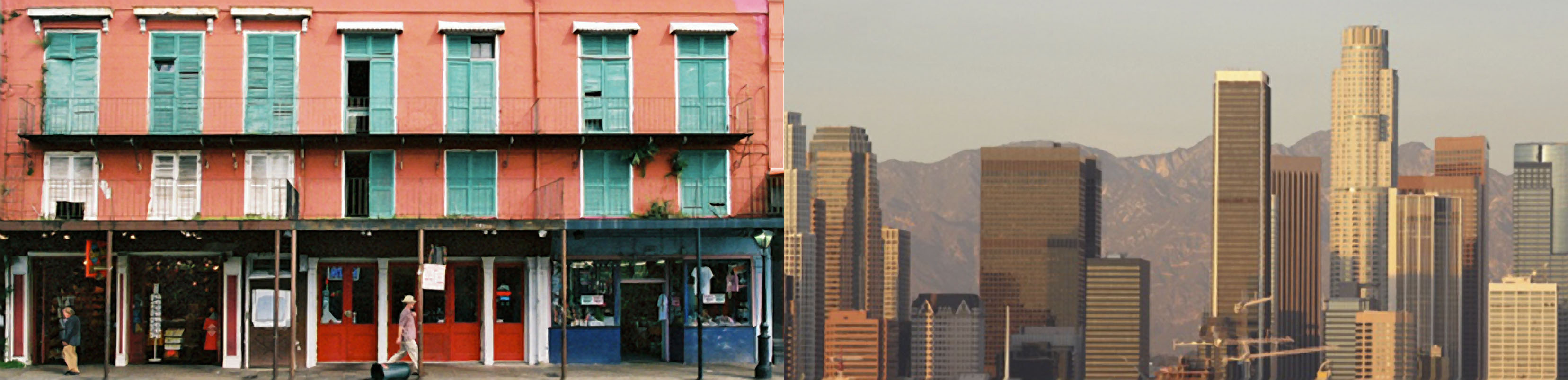
As I am writing this, the city of Los Angeles is under siege – under siege because the current administration in Washington DC has targeted it – sent Immigration Control and Enforcement agents to pull people off the streets, out of businesses – out of Home Depot parking lots, out of car washes, out of restaurant kitchens and clothing factories – to enforce its immigration policies. And it has sent in the National Guard, against the will of the city’s Mayor and the state’s Governor, to quell peaceful and legitimate protests against the administration’s terror. I am in the last couple of days of a week plus long visit to L.A. – the city my parents moved my brothers and me to as young children, the city where I grew up, and the city where I spent over half my life. The city has shaped me as much as the city of New Orleans, the city of my birth and ancestors, which in itself is a city of immigrants. Los Angeles is, of course, and always has been a city completely shaped by immigrants – a city which has freely welcomed immigrants throughout its history. Immigrants currently make up over 35 percent of the County of Los Angeles’ total population. And the city has benefited greatly from its immigrants’ contributions over the years. It would not be what it is – it would have no culture, no industry or no prosperous economy without immigrants. The city is dotted with smaller neighborhood designations – Little Armenia, Little Tokyo, Thai Town, Chinatown, Koreatown, Little Ethiopia, Filipinotown, and of course, its founding square is Olvera Street, at the heart of downtown – a lasting tribute to the city’s Mexican founders (at least half of whom were Afro-Mexican) and immigrants who live throughout the city. It’s hard for me to even begin to know how to talk about how important immigrants have been to this city, and is it my hope and intention to work out my feelings on paper further over the next few days and weeks. For starters, I can’t help think of the industry which the city is known for throughout the world built by European Jewish immigrants. And the fact that L.A. has become a world class food city – a destination food city, thanks in large part to immigrants, who lead and man the city’s many restaurants. Additionally, anyone growing up in Los Angeles grew up eating Mexican food. We, of course, in our own homes ate the food of wherever our family hailed from, but Mexican food for me (and no doubt others) was like a second mother, and I, like so many others, still love it. I was lucky enough, as a child, to sit at the table many a night, at the home of my best early grade school friend, Lillia. Lillia’s family were recent immigrants to the city – her mother spoke almost no English, but her cooking spoke to my heart. I was always welcome in their home, and at their table. Lillia’s mother would deftly pat masa de harina into tortillas right beside us at the table, throw them on to a sizzling griddle, and present them to us, piping hot, to scoop up braised meats, beans and rice, with a slice...
read moreReflection – 60 Years After the March on Washington
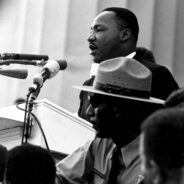
This weekend, a march is being held in Washington DC commemorating the historic March on Washington held this month 60 years ago – a march indelibly imprinted in the mind of this adolescent girl, along, no doubt, with many others of her generation. The first march was considered radical and potentially dangerous, so much so that President John F. Kennedy, stayed away – nervous about attending. Instead, he watched and listened to the speeches being given at the Lincoln Memorial facing the National Mall through an open window from his White House office. Image Courtesy of Wikimedia Commons The march was seminal, laying the foundation for so much of the progress we’ve witnessed during our lives – including the election of a black man as President of the United States, something most of us felt was unimaginable in our lifetime. Thinking back on it all can elicit exhilarating moments. And yet, it is completely disheartening to know that so much of what Dr. Martin Luther King, Jr. and others marched for that day – indeed, spent and gave their lives fighting for – we, as a people, are still having to fight ferociously for today. Image Courtesy of Wikimedia Commons Today the right and easy access, for all American citizens to vote, remains a battle. Young black men are still being killed indiscriminately. Health outcomes for black women and infants – challenged even more so now with the war against safe and legal access to abortion – lag way behind those of white women in the U.S., and many other countries in the world. Today I listened to recordings of Sweet Honey in the Rock, a group I loved decades ago, but hadn’t thought much about lately, until I mentioned Bernice Johnson Reagon’s wonderful lyric in the last piece I posted here, speaking of how the music formed me. The music not only formed me, but fueled an entire movement of change. Image Courtesy of Wikimedia Commons I was reminded of the lyric again this week when a Facebook friend posted that she was “resigning – staying away” from being a public voice for social change, and I quoted them to my friend. She responded that she was moving her voice into more artistic areas. I get it. I understand the burnout, but I say we bring who we are to our artistic work – whether it’s writing, singing, dancing, acting, creating beautiful food – at least I hope we always strive to do so. And again, I can’t help but think of the beautiful artistry speaking of social change in the work of Sweet Honey in the Rock, and indeed so many of the artists who raised their voices on that August day in 1963 and beyond. We need the artistry to fuel us and keep us going. “We who believe in freedom cannot...
read moreUncle Manuel Perez
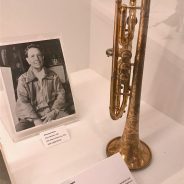
I was in high school, and had just joined the band and selected my instrument – the trumpet – when learned that Manuel, my father’s uncle, had been a trumpet player, and a very influential one , at that.
read moreVisiting Natchez, Mississippi
An easy drive from New Orleans, Natchez, MS offers a perfect getaway with river views and the nation’s largest stock of antebellum homes.
read moreVisiting the Whitney Plantation
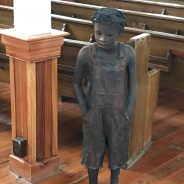
I returned to River Road this past weekend to spend an aptly cloudy afternoon visiting the Whitney Plantation, the United States’ only plantation dedicated to the enslaved.
read moreA Visit to Washington DC – and the New African American Museum
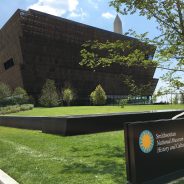
A summer escape to the Washington DC area with a visit to the new National Museum of African American History.
read moreNew Orleans’ Confederate Monuments
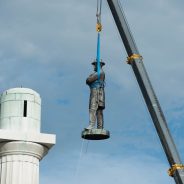
Mayor Mitch Landrieu gave a moving speech Friday afternoon, as the last of the city’s four Confederate was coming down. He mentioned in his remarks all the people that had left New Orleans because of exclusionary attitudes – people like my parents, and indeed much of my extended family, who joined the tens of thousands, and perhaps more, in leaving the city for a better life.
read moreCuba Revisited: Day 1 – The Rolling Stones
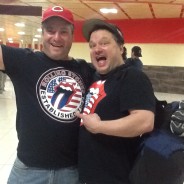
My second visit to Cuba, at this historic time, begins with seeing The Rolling Stones.
read moreCelebrating Dooky Chase’s Restaurant and Ms. Leah Chase
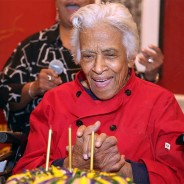
Ms. Leah Chase’s 93rd birthday celebration, and the 75th anniversary of Dooky Chase’s restaurant.
read moreMeet Alon Shaya
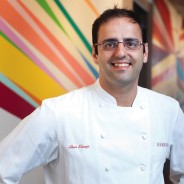
Meet Alon Shaya, who happens to be having a great year. Now, I’m looking back 10 years, when he and John Besh re-entered New Orleans right after the storm.
read more

