






A City of Immigrants

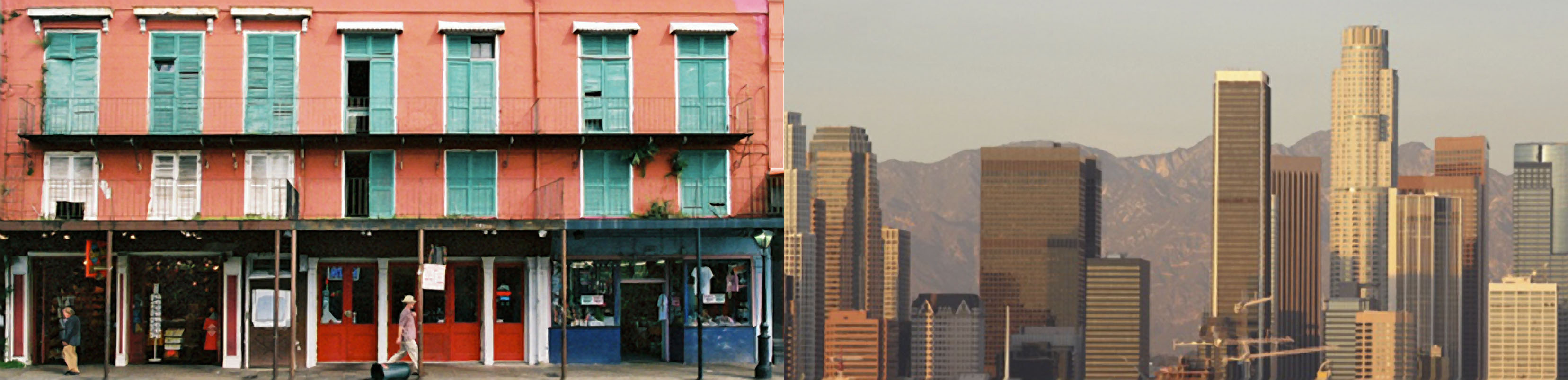
As I am writing this, the city of Los Angeles is under siege – under siege because the current administration in Washington DC has targeted it – sent Immigration Control and Enforcement agents to pull people off the streets, out of businesses – out of Home Depot parking lots, out of car washes, out of restaurant kitchens and clothing factories – to enforce its immigration policies. And it has sent in the National Guard, against the will of the city’s Mayor and the state’s Governor, to quell peaceful and legitimate protests against the administration’s terror. I am in the last couple of days of a week plus long visit to L.A. – the city my parents moved my brothers and me to as young children, the city where I grew up, and the city where I spent over half my life. The city has shaped me as much as the city of New Orleans, the city of my birth and ancestors, which in itself is a city of immigrants. Los Angeles is, of course, and always has been a city completely shaped by immigrants – a city which has freely welcomed immigrants throughout its history. Immigrants currently make up over 35 percent of the County of Los Angeles’ total population. And the city has benefited greatly from its immigrants’ contributions over the years. It would not be what it is – it would have no culture, no industry or no prosperous economy without immigrants. The city is dotted with smaller neighborhood designations – Little Armenia, Little Tokyo, Thai Town, Chinatown, Koreatown, Little Ethiopia, Filipinotown, and of course, its founding square is Olvera Street, at the heart of downtown – a lasting tribute to the city’s Mexican founders (at least half of whom were Afro-Mexican) and immigrants who live throughout the city. It’s hard for me to even begin to know how to talk about how important immigrants have been to this city, and is it my hope and intention to work out my feelings on paper further over the next few days and weeks. For starters, I can’t help think of the industry which the city is known for throughout the world built by European Jewish immigrants. And the fact that L.A. has become a world class food city – a destination food city, thanks in large part to immigrants, who lead and man the city’s many restaurants. Additionally, anyone growing up in Los Angeles grew up eating Mexican food. We, of course, in our own homes ate the food of wherever our family hailed from, but Mexican food for me (and no doubt others) was like a second mother, and I, like so many others, still love it. I was lucky enough, as a child, to sit at the table many a night, at the home of my best early grade school friend, Lillia. Lillia’s family were recent immigrants to the city – her mother spoke almost no English, but her cooking spoke to my heart. I was always welcome in their home, and at their table. Lillia’s mother would deftly pat masa de harina into tortillas right beside us at the table, throw them on to a sizzling griddle, and present them to us, piping hot, to scoop up braised meats, beans and rice, with a slice...
read moreTraveling through Cádiz – and Beyond
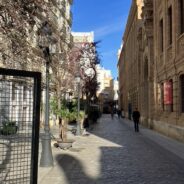
A ramble down an old Cádiz street When I told a friend about my upcoming trip shortly before I left, she said (even though she was encouraging to me), “I’m only a New World person”. And it’s true – I, too, have traveled almost exclusively in the New World. But the New World emerges from the Old. Traveling through Cádiz (the oldest city in Western Europe, founded initially by the Phoenicians and later part of the Roman empire), I witnessed my Old World roots in a personal way – learning that this was the birthplace of the trans-Atlantic slave trade, as this port city held the exclusive licensing agreement with the port of Havana in the New World (as early as the 16th century). I wasn’t the only one. Cári, an Afro-Cuban woman traveling with us, was visibly moved after our walk through the port of Cádiz, and learning the history. The connections that I had seen Ned draw, and his insistence on tracing the African roots echoing through southern Spain – in the dance, in the music, in the history and architecture – was one of the things that initially drew me to this tour. I was chasing the breadcrumbs of the “long song” (a phrase coined by early jazz musician, transplanted from New Orleans to Europe, Sidney Bechet), as I took to calling it – the song that echoes across the Atlantic, to the Gulf of Mexico and the Caribbean. I had learned from Ned, in reading his book, that Havana was the capital of the Spanish colonies in North America. And indeed, there was a steady flow of trade (most obviously and importantly, the slave trade) between Havana and New Orleans, lasting from the 1600’s all the way up to the embargo levied in the 1960’s. It’s because of the embargo, still in place, sadly, that there is so little memory of this connection today. The Port of Cádiz The remnants of a Roman amphitheater in old Cádiz We passed the Calle de los Negroes there – in the African section of town. In the old town square of Cádiz, I was excited to see the statue of Moret, a celebrated 19th century politician. I have numerous Moret (almost all of whom believed their ancestry was French), cousins and ancestors in my extended family line. Emilio J. Rodríguez Posada, CC BY-SA 2.0 https://creativecommons.org/licenses/by-sa/2.0, via Wikimedia Commons It wasn’t Cádiz alone, though. As if visiting there wasn’t enough connection to my history, after I had begun planning this trip, I received an e-mail out of the blue, from a distant and unknown cousin, telling me that my own 3rd great-grandfather had left the coastal town of Sitges, south of Barcelona, to sail to Louisiana in the 18th century. Breadcrumbs. Pretty amazing, right? When I first began looking into visiting Barcelona, a few people had mentioned that it was worth adding on a side trip to the beautiful little town of Sitges. Now I just had to go. So to end my time in Spain, I added on a couple of days there. It was the perfect place to wind down at the end of this intense 3 weeks. This Mediterranean coastal town was like most coastal towns. There was beach volleyball, people out walking their dogs alongside...
read moreOn Returning from Spain, Part 2 – Soul Busting
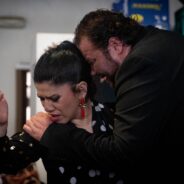
Lola Flores – Jerez’s “patron saint” of Flamenco I think it’s safe to say that the return to our every day normal lives was a bit of a task for most of us. Quite a few of us texted back and forth in our What’s App group in those first few days back home, comparing notes on our experience of the trip and the “re-entry”. I said that I felt like my soul just busted open, in ways, as a result of this trip. And that there were life lessons in it in going forward. We saw a large spectrum of flamenco music and dance – from very traditional to true boundary and genre expanding flamenco. What stood out to me most, was the level of passion I witnessed in the performances we saw. I turned to one of my fellow travelers, who was sitting beside me after one of them – of one of Spain’s most acclaimed flamenco troupes – at the Jerez Flamenco Festival – and asked “Where does all this passion come from?” It was an unabashed, deep passion – sung out, stomped out so loudly (in a good way) into the world – through voices, through bodies, feet and hands. After I asked that question, I said to him, “I know that it resides in me, too. It’s in my blood, in my DNA (read more about that in a later post). And it wasn’t just in large theaters. We stopped into a little cafe in Jerez for lunch, where there was a small stage flamenco performance. The pictures in this post are from that cafe. We all loved it, but I don’t think anyone enjoyed it more than the waiter who just couldn’t contain himself from the sidelines and jumped on the little stage, too. (See the video below) This is what it’s like to be truly immersed in a culture, I thought. And I saw the passion in Pepa, our translator – Barcelona born, and now a New Orleanian preaching the gospel of flamenco in that city. I said to Ned, our fearless leader and curator of this tour, in our post-trip chat, that a lesson for me to ponder was how to bring more of that passion into my life. The Flamenco Festival performance the night before the first above mentioned performance, was also one of those true boundary pushing – perhaps the most -performances. I felt the same thrill and awe that I did as a very young woman – and very young dancer – of seeing the Martha Graham and Alvin Ailey companies perform for the first time – full Broadway production values and all. It’s a gift to still be able to be thrilled in that way in what I’ve come to refer to as the “fourth quarter”. There was the classical guitar performance at the Romate winery in Jerez – home of sherry, as well as flamenco – on a Sunday morning ending our private tour and tasting, the night after those flamenco concerts, that felt like a Sunday going to church meeting. (Again – more about that in a later post.) So – the gift and lesson – more passion for life, and brought to our life, in this “fourth quarter”. All of the wonderful flamenco photos...
read moreOn Returning from Spain

I’ve just returned from a bit over 3 weeks in southern Spain. The second two weeks was spent with a group, on a tour curated by Ned Sublette, a favorite writer of mine, who became a personal acquaintance during the COVID shutdown, when he began a Zoom group showing wonderful documentaries, showcasing what he calls the Afro-Atlantic, and who’s now a friend. Our fearless leader, Ned. Ned said to us at the beginning of the trip that he hoped it would be transformative – a pretty big aspiration. But it was, for me, in several ways. BTW, the last time I took a transformative trip – a trip that’s stayed with me throughout my life – and the last time I crossed an ocean – was almost exactly 40 years ago. That trip was more overtly “spiritual” as it was an ecumenical religious tour to India. But during the course of a lifetime, what’s spiritual in ones life evolves, so this trip certainly fell into the realm of the “spiritual”, too. For several years, Ned has led tours to New Orleans (I didn’t really feel the need for that) and to Cuba. Although I didn’t join one of his tours there, it was something he wrote in his book, The World That Made New Orleans, that finally got me there. But when he sent out a feeler last year, saying he was considering an Andalućia tour, and wondering how much interest there was, I thought – now here’s a tour that piques my attention. You know how things go – at least they often do for me. I thought I really can’t afford it. Maybe next year I’ll be better able to afford it. Some other year will be better, perhaps … until Al, my younger brother left us; until he just didn’t wake up one morning, and I got a serious “wake-up” call from the “universe”, if you will. There is no other time. We are not promised some other year. So, shortly after Al’s funeral, I contacted Ned and committed to the trip. I felt Al with me on this trip – like he had given me a gift, even in his death – the wake up call to go out and live my life. One of my fellow travelers, at one of our last lunches together said something similar. She had spent time in Rwanda after the war and the rebuilding of that country. The image of a little boy’s eyes she had seen in a photo in a museum there haunted her. She asked the image what message it had for her amidst all this suffering. Go out and live. Live for me. Live your life, it said to her. I told her about Al, and we understood and shared the solemn charge. She was traveling with her husband who had admitted to me earlier that he was traveling with early stage Parkinson’s disease and a recent cancer diagnosis. It was a gift to me to see so many living their lives – in spite of the illnesses, the age, the uneven gait – a sign of degenerated knees – that I recognized and shared with them. Just go out and live. Live your life. Frankly, I’m still processing it all – and may be...
read moreReflection – 60 Years After the March on Washington

This weekend, a march is being held in Washington DC commemorating the historic March on Washington held this month 60 years ago – a march indelibly imprinted in the mind of this adolescent girl, along, no doubt, with many others of her generation. The first march was considered radical and potentially dangerous, so much so that President John F. Kennedy, stayed away – nervous about attending. Instead, he watched and listened to the speeches being given at the Lincoln Memorial facing the National Mall through an open window from his White House office. Image Courtesy of Wikimedia Commons The march was seminal, laying the foundation for so much of the progress we’ve witnessed during our lives – including the election of a black man as President of the United States, something most of us felt was unimaginable in our lifetime. Thinking back on it all can elicit exhilarating moments. And yet, it is completely disheartening to know that so much of what Dr. Martin Luther King, Jr. and others marched for that day – indeed, spent and gave their lives fighting for – we, as a people, are still having to fight ferociously for today. Image Courtesy of Wikimedia Commons Today the right and easy access, for all American citizens to vote, remains a battle. Young black men are still being killed indiscriminately. Health outcomes for black women and infants – challenged even more so now with the war against safe and legal access to abortion – lag way behind those of white women in the U.S., and many other countries in the world. Today I listened to recordings of Sweet Honey in the Rock, a group I loved decades ago, but hadn’t thought much about lately, until I mentioned Bernice Johnson Reagon’s wonderful lyric in the last piece I posted here, speaking of how the music formed me. The music not only formed me, but fueled an entire movement of change. Image Courtesy of Wikimedia Commons I was reminded of the lyric again this week when a Facebook friend posted that she was “resigning – staying away” from being a public voice for social change, and I quoted them to my friend. She responded that she was moving her voice into more artistic areas. I get it. I understand the burnout, but I say we bring who we are to our artistic work – whether it’s writing, singing, dancing, acting, creating beautiful food – at least I hope we always strive to do so. And again, I can’t help but think of the beautiful artistry speaking of social change in the work of Sweet Honey in the Rock, and indeed so many of the artists who raised their voices on that August day in 1963 and beyond. We need the artistry to fuel us and keep us going. “We who believe in freedom cannot...
read moreThe Music and Me
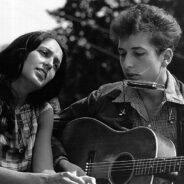
I know – It’s been a while since I’ve posted anything here, but today I am beginning again, although with a slight difference. While this blog has never been a typical food blog – I always believed I should offer a well written story, and was concerned with many things besides just offering a recipe or restaurant review – it did adhere mostly to food, travel and entertaining. I certainly haven’t stopped cooking – in fact, I’m probably cooking more than ever – at least at home for myself – but I feel I am compelled now to open things up here. I have so much more I want to talk about. The blog was originally named PainPerdu Blog meaning “lost bread”. There will still be a theme of loss (for the Perdu) running through it, and I hope will deal in a broader sense with the Pain – the bread. Bread, meaning sustenance and nurturance, as there are many things that sustain us beyond just what we eat. And the pieces I write most definitely will still reflect who I am. So, I hope you will join me on this journey. Thanks. This piece was written on May 24th – Bob Dylan’s 82nd birthday, and the day Tina Turner died. Portrait of Harry Belafonte, singing *1954 Feb. 18 *gelatin silver Carl Van Vechten – Van Vechten Collection at Library of Congress What a month it has been – beginning with the death of Harry Belafonte. In my childhood household, like so many others, we heard Day-O, Day-O – the Banana Boat Song – over and over again. We sighed for the Brown Skin Girl, left behind to stay home and mind baby. My uncles sang Scarlet Ribbons to us as lullabies, feeding my nascent love of folk music. We watched the tall, handsome performer march alongside Dr. King on our black and white TV’s. And then a few days later, Gordon Lightfoot – the clear, light baritone voice I fell in love with as a teenager. In the summers of 1967 and ’68. I would lie in front of the stereo speakers listening to him sing Black Day in July, over and over again – the black days, some of which had erupted just down the hill from my childhood home. When I got to college, I was fortunate to have a roommate who loved him, too. We listened to him tell the story of his Canada that “existed long before the white man and long before the wheel, the deadly silent silence too silent to be real”. Between the years of listening to Belafonte and Lightfoot, it was Peter, Paul and Mary, who I sometimes like to joke raised me, as I listened to their voices so often in my formative years. I aspired to speak and sing in the deep rich strong voice of Mary Travers. I grieved for her as if she was a personal friend when she died. International Talent Associates (management), Public domain, via Wikimedia Commons And then I was introduced to Joni Mitchell. I had never heard of her before a group of friends bought her album, Clouds, and gave it to me as a gift on my 17th birthday – only one month before I left for college. I stayed awake...
read moreLeaving New Orleans – Moving On
A full year and a full season have passed since I left New Orleans. I began a journey – a longer one than I thought it would be – of resettling in a new house, in California. For those of you who haven’t figured it out yet, I have ended up in the East Bay Area, where I went to both college and to culinary school, and where I have a community of long-time friends. New Orleans, at this moment, is in the height of Carnival season, which will culminate on Mardi Gras, next week. The celebrations and parades have resumed, in full force, after being cancelled last year, and I am feeling nostalgic for the city. I had so many what I can only describe as magical moments there – sitting in the Jazz Tent at Jazz Fest, thrilling to the sound of beating drums of marching bands as they approached along St. Charles Avenue and feeling the excitement as the first neon lit float approach. I’ve eaten meals that were a revelation, and marveled at giant bowing limbs of ancient oaks. I’ve walked past colorful, abundant gardens and landscapes that enchanted and awed me. I loved my charming 140 year old house – a house that delighted me as I entered the front door and was embraced by the vibrantly warm colors – the rusty orange, taupe and salmon. I loved – thanks to its shotgun layout – the view of each room, framed and topped with a lintel, unfolding into the next. But sadly, I came to learn that one can enjoy, appreciate, love spending time with, and even, truly love something, somewhere or someone, but sometimes still cannot spend the rest of our life living with them. So – it was time to move on. My new house looks through large picture windows and sliding glass doors onto a tranquil, almost forested, scene. I can sit on my wrap-around deck and listen to the creek that runs just below the the property. In the summer, I sometimes had a little doe who visited near the creek, and I love watching the hawks fly overhead. It is a lovely sanctuary, so I really have to be grateful for each new adventure that life brings, right? Who knows what’s coming up next in life? But whatever it is, this last year plus’s experience has taught me I must be open to...
read moreStaying in Baja

Circumstances (which I won’t bother to go into here) find me in Baja, Mexico for an as yet undetermined period of time. Although I’m not ready to pack up and move south of the border, I have to say it’s pretty pleasant. There are the truly awesome ocean views and sunsets, great seafood (dining on the great seafood and the beautiful sunsets are often combined) and truly friendly people … A few days ago, at nearby Splash Restaurant, where I’ve been spending a lot of time, I was gazing, mesmerized, out at the barely perceptible swells burnished by the sunlight, grow into big waves and crash on to the shore. I wondered out loud to the manager who had come over to chat with me, whether the people who are native to the area truly appreciate this, or have come to take it for granted. We get caught up in our busy lives, he told me, and sometimes we forget how lucky we are – and it’s all there for free for us, he added. Indeed. I’m staying about halfway between Rosarito and Ensenada. Ensenada has a beautiful marina, a great local seafood market – and some pretty outstanding restaurants, too. There are cute coffee shops, in lovely “mini-mall” courtyards, even a Starbucks or two for Americans “jonesing” for such. More about there in the next post. As luck would have it, I happened to be here at the time of the Day of the Dead celebration. While COVID is, obviously, as much a threat here as it is across the border, everyone’s taking precautions. I don’t hear any bickering about wearing masks. Every business I enter I’m given a mandatory temperature check, there is obligatory hand sanitizer at the door, and everyone – everyone is wearing masks. And fortunately for me, all of the restaurants have large outdoor patios. Yep, life can be very good, even when it’s uncertain. Even when a storm is coming, sunsets can be pretty awesome The seafood can even find its way into an omelette for a special brunch...
read moreDriving Through the Hill Country of Texas – and Visiting the LBJ Ranch
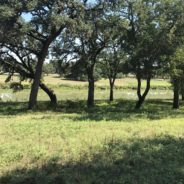
It’s so beautiful, I think, as I drive through in the Hill Country of Texas. It’s not the dramatic vast ocean and mountain beauty of California, or the lush oak trees draped with moss, verdant beauty of Louisiana, but still, an awe inspiring beauty. There are vast blue skies with huge fluffy clouds hovering over and nestling themselves on the green rolling hills. It’s good to get out, drive the highways – especially the back roads – and see the great diversity of this country. There aren’t a whole lot of tourist attractions in the Hill Country. The main attraction for me was visiting the LBJ Ranch, part of our nation’s historic park system. Some of us children of the 1960’s, who came of age during the Vietnam War debacle, may have a difficult time seeing past LBJ’s role in that when scrutinizing his legacy. But God knows, Presidents are human, and humans are flawed, in spite of greatness in other areas. Sometimes it seems the greater the leader, the deeper the flaws can be. That time was a time, not unlike today, so fraught with discord, unrest and tension. LBJ’s legacy is so pertinent today – the shepherd and signer of the Voting Rights Act, now under assault; the visioneer of the Great Society and the War on Poverty. The work remains unfinished. I felt something wild, sacred and compelling about his deep connection to this land, a land he believed molded the character of the people who lived on it – land inhabited by native tribes, Mexican ranchers, Africans – some free men who entered from Mexico, some enslaved, and some who, post-Civil War, roamed it as the famed Buffalo soldiers – sturdy German immigrants, all who made up the great diversity that is America, something that seems almost lost to us today, only a few generations later. And something powerfully moving as I considered how the policies so important to him were informed by that land and the various peoples who’d lived on it – and often worked cooperatively alongside each other – over time. As I left the site, the park ranger asked me how I enjoyed the visit. I replied, it’s so good to look back on a time where there was great leadership in this country. Her eyes widened behind the plastic shield covering her face, and she silently and enthusiastically nodded in...
read moreRediscovering My Neighborhood – Algiers Point, New Orleans – and Transforming Myself
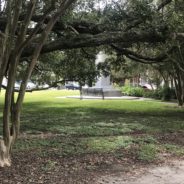
We are now in our 4th month of a stay at home, or what’s been now re-dubbed here in New Orleans, a “safer at home” mandate. In the first month or so of the order, I viewed it as an adventure, of sorts, even as a personal moment of transformation that we were all going through together. I appreciated the quiet. I noticed the cardinals landing in my backyard, as they traveled along their springtime migratory path, even capturing a rare picture of one (they are notoriously skittish). I cooked something interesting for myself every day (more about that in the next few posts). I watched a lot of great shows on Netflix. And I walked in the evenings, using the time to rediscover my lovely neighborhood – Algiers Point – noticing that we were, ironically, in the midst of a particularly beautiful spring, in what would have been the height of New Orleans’ festival season. I am lucky – it’s a neighborhood full of 100 year old+ homes and lush beautiful gardens. I shoot pics of colorful plants, which my Facebook community has schooled me in when it came to their names. We have a couple of lovely small parks tucked amidst the tree lined streets. In those cooler days of spring, people sat out on their front porches – more than I seen since I was a child – sharing a drink, waving at passersby. Sometimes musicians in the neighborhood would grace us with a porch concert as we stood in front of our houses. Park at the Center of Algiers Point Calladiums Hibiscus Variegated Ginger Trumpet Plant There’s a lovely view of the French Quarter, and its heart, St. Louis Cathedral from a walking/bike path atop the levee, just two blocks from the house. St. Louis Cathedral And near the entrance to the ferry terminal, there’s a rare statue, in this city, that no one wants to tear down. Nearby, there’s also, sadly, a reminder of the area’s darker, shameful past – a plaque marking the spot where captured Africans were off loaded from ships and held, waiting to be ferried across the river and sold into slavery. Satchmo’ Louis Armstrong That reminder, in a circle of history, brings us back to this moment – a transformational moment, a shifting paradigm, if you will, for our country. I marvel that, in my 60’s now, I am witnessing now another time of societal upheaval. I find myself saying to friends that our generation’s lives are bookended by this time, as I reminisce about the era of the late 1960’s, comparing the unfinished work of that time to the work taken up by a younger generation today. I find myself chafing a bit, anxious to get back to my life. I use the time to transform myself, as best I can. And I wonder how I can best care for myself, and my...
read more

