







The Food in Cuba – and Recipes for Black Bean and Rice
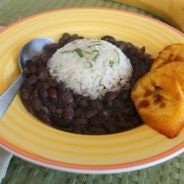
So many have been quick to ask me questions about the food in Cuba, and I have mulled over those questions, answering them only superficially, so that I could gather my thoughts to write here. The short answer is that the food was a mixed bag, although not because of lack of desire, skill or creativity on the part of those preparing it. We didn’t see many fresh fruit and vegetables, and items like cheeses and good wine (most all the wine comes from Chile – and a couple here and there seemed as if they had not been handled properly) are limited, in large part because of the embargo. Because Cuba is an island, of course, there was plenty of seafood – we had wonderful seafood paella and grilled seafood skewers – but once or twice, unfortunately, I felt that I wasn’t eating the freshest or best quality seafood. We lunched at a self sustaining community- Las Terrazas (which I will write about in my next post), and at Organiponico Vivero Alamar, an organic farm community – the site of our largest selection of fruit and vegetables. We ate at the Hotel Naçional, the gorgeous hotel where we were staying – dinner one night and breakfast every morning, lunched at traditional restaurants in Havana, even an Italian one where several of us enjoyed the thin crusted greasy/cheesy kind of pizza found all over New York City. Each night, outside of the one dinner at the hotel, we dined in paladares, public/private partnership restaurants (50% profit to the government, 50% to the chef/owners) in private homes which the government now allows. And they really are private homes. On my way to the bathroom in one of them, I passed a room where a grandfather was watching TV. The food at Las Terrazas and at the organic farm was the best food we had, as I said above, not because of any lack of will on the part of those preparing it at other places, but because it seems that individual chef’s access to the best product is an issue. The government, in this socialist country, controls the distribution of food (every household gets a monthly ration book for staple items), as it does everything else. It means that no one goes hungry, just as no one is homeless, as the government provides housing to everyone, or no one is without access to healthcare, or as much education as they desire and have aptitude for – all good things, for sure. But it also means that chefs are not allowed to seek out their own quality sources, nor are farmers, ranchers and fishermen allowed to set up businesses to sell directly to them, practices which have done so much to improve the quality of restaurant food in our country. Especially since I’m a California and Louisiana girl, where farm and coast to table practices are a way of life, this stood out to, and bugged, me. I asked Martin, our guide, a lot of questions on this issue. People are allowed to grow their own vegetables, if they have the land, he told me. They can share it with their neighbors, but they are not allowed to set up businesses selling their products. The few organic farm communities can keep...
read more

