






A Registered Dietitian Shares her Thoughts on Healthy Fish Choices and the State of our Oceans
Okay- as much as we love good food and good times, sometimes we have to get a little intense, and stop to consider just where our food comes from, how it's raised, and just how it gets to our groceries. Sadly, more and more, we also have to consider whether our favorite foods will still be around a few years down the line. Today I am happy to have Monika Woolsey, a registered dietitian specializing in the treatment of chronic and stress-related disease, as a guest blogger. Monika contacted me when a mutual friend told her about the LA Helps LA Event, because she feels passionately about the state of our oceans, and how the health of the earth’s oceans impacts our health as humans. Thanks to Monika for sharing her expertise and insight, and read to the end, as she has a special gift for all who attend our event. -Best, G. Not long into the process of choosing my area of specialty, and digging into the research, it became clear that there is huge potential in the ocean for solutions to some of our most debilitating health problems. Diabetes, arthritis, osteoporosis, Alzheimer's disease, schizophrenia, even infertility…have all been seen to respond to omega-3 supplementation. As the research about this continued to pile up, it became clear to me that humans are completely dependent on healthy oceans in order to have good health themselves. Unfortunately, we don't seem to understand the "healthy oceans" half of that equation. Rather than look at the science and the data, which suggest that we can get omega-3's from any ocean-related food source, we've become obsessed with salmon. The demand for wild salmon has placed stress on those populations. It is likely our obsession with this one fish that created demand for genetically altered, quick-growing salmon, and that has subsequently created outrage. Here are some challenges to this obsession with salmon. Did you know: lake trout actually has more omega-3 fatty acids per ounce than salmon? Did you know: wild salmon aren't always 100% wild? That they often spend up to the first two years of life in hatcheries before being released in the ocean? Our misperception of the definition of the word "wild" has made it difficult for fish farming to take hold as a sustainable solution to our increasing demand for fish. Did you know: as of this month, five different species of farmed seafood (oysters, rainbow trout, Arctic char, barramundi, and mussels) made the Monterey Bay Aquarium Seafood Watch Program's list of Super Green Choices? Did you know: domestic catfish farmers have received endorsement from Sea Choice, the Endangered Fish Alliance, Sierra Club, Audubon Society and Monterey Bay Aquarium for their green practices?Our attitude seems to be that because the ocean is big, that there's more than enough fish for everyone. Not true! Did you know: Chilean sea bass, grouper, mahi mahi, red snapper, and several types of salmon have been rated as "avoid" by the Monterey Bay Aquarium because they are either overfished or cultivated in ways that harm the environment? Beyond just the salmon vs. “green fish” issue, we've also been slowly suffocating our oceans, making it hard for any life to thrive. The recent oil spill in the Gulf of Mexico definitely got our attention, but that region has been sick...
read moreAn Homage to the Gulf, a Short Elegy for Shrimp and a Recipe for Remoulade
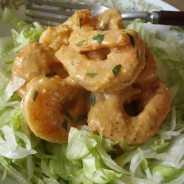
I have spent the last month organizing a fund raising tasting event (LA Helps LA), here in Los Angeles, to benefit the Gulf Restoration Network based in New Orleans. Because it was all over the news this summer, some may think it’s about the BP oil spill. Or perhaps because we have just passed the 5th anniversary of hurricane Katrina, some may think it’s in response to that. While it’s a silver lining to a very dark cloud, that the oil spill brought attention to the Gulf, and while I hope our nation never forgets the destruction wrought by Katrina, it’s not just about the BP oil spill, or Katrina. In this post, I am going to share with you a few issues, issues that have existed for a very long time, and that I wish everyone understood about the Gulf Coast region, which is the third coast of our nation. Perhaps it'll give you a better sense of why I have poured so much energy into this event. Much of this information came from www.healthygulf.org, which has been in existence since 1995- well before either of the above mentioned occurences. I urge you to visit their site for more info. The Dead Zone Sounds scary, right? And it is, although maybe not in the way you’re thinking. You may have read my relating of this story before. On a summer visit to New Orleans as a young teenager, I accompanied my Uncle JuJune and Aunt Leticia on a trip to “make” the groceries, as they say down there. I marveled at the low price of shrimp in the local grocery stores (a premonition of my life as a chef, perhaps). Uncle JuJune responded “hell, they’ll just give ‘em away if you drive a pick up truck down to the Gulf, they got so much of it.” Unfortunately, they are not quite so plentiful now. I was so saddened to learn what has happened, in the course of my adult lifetime, to shrimp in the Gulf. A “dead zone” (an area where oxygen levels in the water are too low to support life) forms seasonally off the coast of Louisiana and Texas, which while varying in size from year to year, often reaches the size of states like Delaware and New Jersey. Those fish, crabs, and shrimp that can swim away from the Dead Zone do so, while others simply die. So what causes the causes the Dead Zone ? It’s no mystery. According to www.heathygulf.org, “when the Mississippi River reaches the Gulf of Mexico, it is loaded with nitrogen and phosphorus pollution. The polluted water acts as a fertilizer of algae, resulting in large algal blooms. When the algae die, they sink to the saltier water below and decompose, depleting already low oxygen in the deeper water. Because the salty bottom waters do not mix well with the lighter, fresh water from the Mississippi River, oxygen in the water is not replenished, resulting in a large dead zone in bottom waters. There has been an almost threefold increase in nitrogen entering the Gulf from the Mississippi River and its tributaries in the last 30 years. Nitrogen remains the prime factor in causing the Dead Zone. The largest source of nitrogen is commercial fertilizer used throughout the...
read moreA Menu to Complement a Keg Party- and Korean Beef Taco Recipe
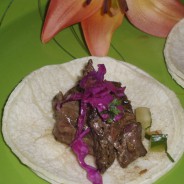
Beer is the world’s most widely consumed beverage after water and tea, and its often called the world’s oldest alcoholic beverage. It’s also a natural to accompany spicier ethnic cuisines. Take a look at this menu designed specifically to complement a beer only party.
read moreLA Helps LA -Tasting Event to Benefit Gulf Restoration Network
On Sunday, October 3rd, food bloggers in Los Angeles, along with many local and national businesses will be doing their part to restore the Gulf of Mexico, one tasty bite and one yummy drink at a time.
read moreLessons learned from Hurricane Katrina and the BP oil spill- and how LA Helps LA
Every disaster we face brings with it hard won life lessons, and even silver linings.
Here are a couple of lessons I have learned, and which I have observed that the people of coastal Louisiana have learned in the past 5 years.
read moreAlison and Aaron Wedding Party and Asian Barbecue Sauce Recipe
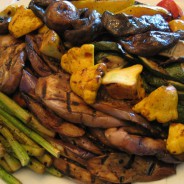
A Pan Asian menu for a casual backyard party to celebrate a newly married couple.
read moreFive Years after Katrina- Hungry Town and Red Beans and Rice
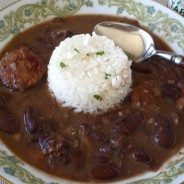
Reading Tom Fitzmorris’s Hungry Town, and making Red Beans and Rice 5 years after Katrina’s wake flooded New Orleans
read more

